⚡ EXECUTIVE SUMMARY
Following a historic 36-day sit-in at Jantar Mantar and nationwide protests by over 24 lakh medical aspirants, India’s NEET-UG paper leak controversy reached a turning point on July 25, 2026, with the resignation of Union Education Minister Dharmendra Pradhan. This comprehensive report outlines the verified timeline, activist Sonam Wangchuk’s statement, police countermeasures, and CBI fast-track court proceedings.
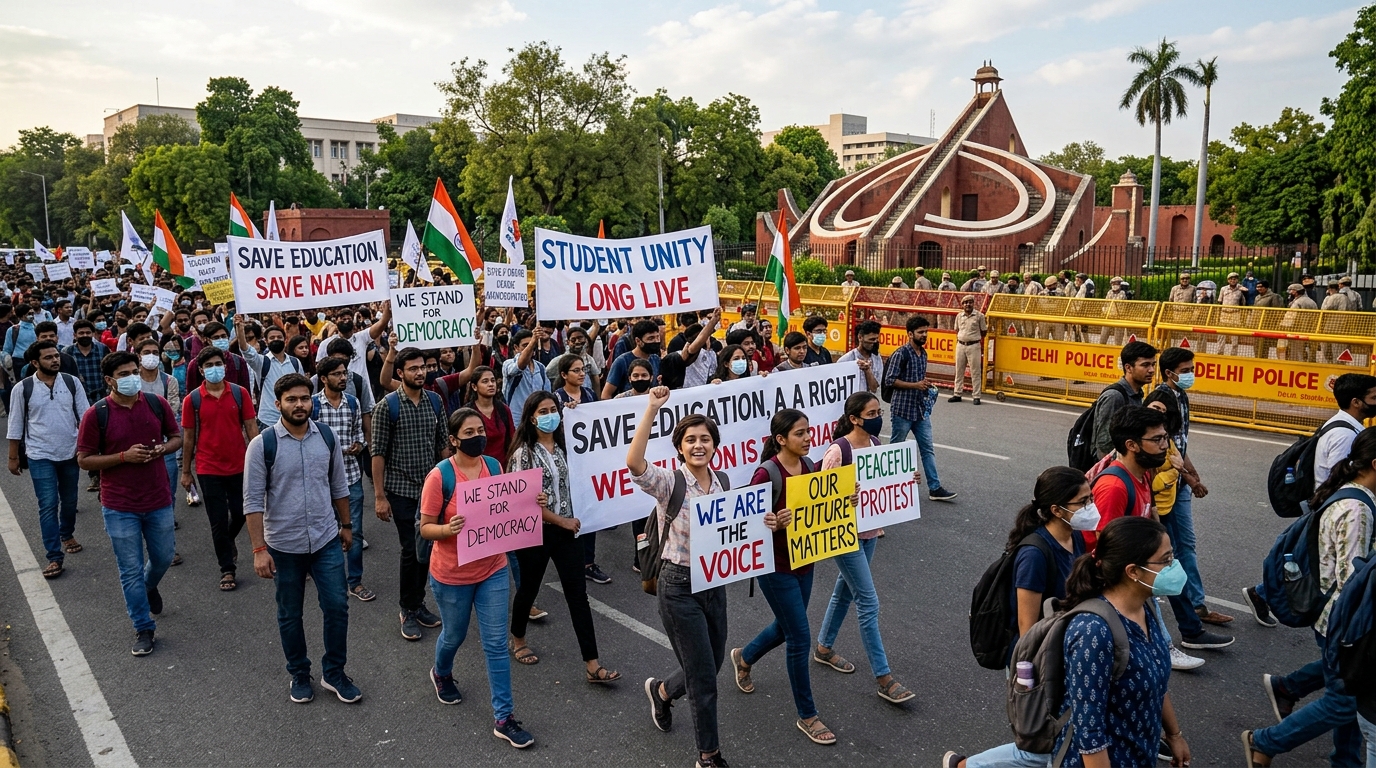
1. Ground Zero: Visual & Sensory Atmosphere at Jantar Mantar
The Delhi Jantar Mantar Student Protest was a 36-day national agitation (June 20 to July 25, 2026) sparked by the NEET-UG paper leak scandal. Thousands of student aspirants gathered under humid monsoon conditions, demanding exam cancellations, institutional reforms, and ministerial accountability in Central Delhi.
The movement escalated on July 20, 2026, during the ‘Sansad Chalo’ (March to Parliament). Multi-tier iron barricades, riot control vehicles, and security cordons blocked key access points at Janpath and Patel Chowk. Security forces deployed mild tear gas and physical containment to secure Central Delhi’s diplomatic area.
2. Verbatim Voices & Official Statements
“This is a victory of democracy and India’s youth, but our fight for a leak-free examination system and complete transparency continues.”
— Abhijeet Dipke, Founder, Cockroach Janta Party (CJP)
“Our youth deserve transparency, not police barricades. Peaceful demonstration is the bedrock of democratic accountability.”
— Sonam Wangchuk, Environmentalist & Activist (Issued from Safdarjung Hospital)
3. Deep Contextual Backstory & Systemic Crisis
The 2026 NEET crisis follows vulnerabilities previously exposed during the 2024 examination, where CBI investigations traced paper leaks in Patna and Hazaribagh’s Oasis School. On May 3, 2026, over 24 lakh candidates appeared for NEET-UG. Following confirmed evidence of paper leaks, the exam was formally cancelled on May 12, 2026, triggering nationwide student marches.
4. Hard Quantitative Metrics & Timeline Breakdown
- Total Affected Candidates: Over 24,000,000 (24 Lakh) medical aspirants nationwide.
- Agitation Duration: 36 Days (June 20, 2026 – July 25, 2026).
- CBI Arrests: 13 key operatives and masterminds taken into custody by late July 2026.
- Key Chronological Dates:
- May 3, 2026: NEET-UG exam held across India.
- May 12, 2026: Exam officially cancelled due to paper leak evidence.
- June 20, 2026: Continuous sit-in launched at Jantar Mantar.
- June 28, 2026: Sonam Wangchuk joins sit-in and begins hunger strike.
- July 18, 2026: Wangchuk hospitalized at Safdarjung Hospital due to failing vitals.
- July 20, 2026: Mass ‘Sansad Chalo’ march; police containment and detentions.
- July 25, 2026: Union Education Minister Dharmendra Pradhan resigns; Pralhad Joshi given charge.
- July 27, 2026: First fast-track court hearing under Public Examinations Act 2024.
5. Stakeholders & Leadership Profile
The 36-day movement brought together diverse student groups, notably spearheaded by the Cockroach Janta Party (CJP) under founder Abhijeet Dipke, alongside spokespersons Ashutosh Ranka and Saurav Das who conducted formal negotiations at the Constitution Club of India. Activist Sonam Wangchuk anchored moral support through his prolonged hunger strike.
6. Legal Proceedings & Future Outlook
Legal proceedings have moved to dedicated Fast-Track Courts constituted under the Public Examinations (Prevention of Unfair Means) Act, 2024. During the initial hearing on July 27, 2026, Special Judge Anu Grover Baliga directed the Director of Prosecution to ensure prompt representation for upcoming hearings on August 3, 2026. Meanwhile, the Supreme Court continues to review reports regarding police conduct during the July 20 march.
Frequently Asked Questions (FAQs)
1. What triggered the July 20 Jantar Mantar protest?
The protest was triggered by the NEET-UG 2026 paper leak affecting over 24 lakh students. Demands included systemic exam reforms, NTA accountability, and ministerial resignations.
2. Was Sonam Wangchuk present at the July 20 march?
Sonam Wangchuk was hospitalized at Safdarjung Hospital on July 18 due to his ongoing hunger strike, but sent a public message encouraging peaceful demonstration.
3. What was the outcome of the 36-day Jantar Mantar sit-in?
The 36-day agitation resulted in the resignation of Union Education Minister Dharmendra Pradhan on July 25, 2026, and fast-track court trial setup under the Public Examinations Act 2024.